


Social skills are the invisible threads that connect us to the world. For children, these skills are essential for expressing thoughts, navigating the complexities of school life, and building meaningful friendships. Strong social communication helps a child understand the nuances of human emotion, allowing them to thrive not just in the classroom, but within the broader community.
The beauty of social development is that it doesn’t require a formal classroom setting or a rigid curriculum. In fact, the most profound learning often happens within the comfort of the home. Parents and caregivers have a unique opportunity to support a child’s social evolution through simple, everyday activities. By turning daily routines into moments of connection, you can make social learning feel natural, spontaneous, and—most importantly—fun.
Why Social Skills Are Important for Children
Developing social skills during early childhood creates a foundation for emotional intelligence that lasts a lifetime. When a child masters the art of interaction, they are better equipped to:
- Communicate thoughts and feelings clearly: Being able to articulate internal experiences prevents frustration and fosters understanding.
- Understand and respond to others’ emotions: This is the root of empathy—learning to read facial expressions, tone of voice, and body language.
- Take turns and cooperate with peers: Essential for group work and maintaining friendships.
- Resolve conflicts respectfully: Learning that disagreements can be handled with words rather than aggression or withdrawal.
- Build confidence in social situations: Reducing anxiety in new environments by providing a “social toolkit” to rely on.
Parents are a child’s first social models. Every time you say “please,” listen intently to a story, or resolve a household minor dispute calmly, you are teaching a masterclass in social behavior. Small, consistent interactions are powerful catalysts for growth.
5 Simple Tips to Build Social Skills at Home
Improving a child’s social aptitude doesn’t have to be a daunting task. By integrating these five strategies into your family’s lifestyle, you create a rich environment for interpersonal growth.
1. Encourage Pretend Play
Pretend play, or imaginative play, is far more than just “playing dress-up.” It is a sophisticated psychological exercise where children simulate the world around them. When children engage in role-playing—whether they are pretending to be teachers, doctors, or superheroes—they are experimenting with different social roles and perspectives.
In this “safe zone,” children can practice reactions and dialogue without the high stakes of real-life social consequences. As a parent, you can join this world to model positive behaviors. If you are playing “restaurant,” you can demonstrate how to wait patiently for a table or how to politely ask for a glass of water. These sessions help children internalize:
- Sharing and Collaboration: Deciding who plays which role requires negotiation.
- Perspective-taking: Asking, “What would a doctor say to someone who is scared?” helps the child step outside their own ego.
- Emotional Regulation: Practicing how characters handle “bad news” in a game helps children manage their own disappointment in reality.
2. Plan Intentional Playdates
While solo play is important, social skills are ultimately tested in the presence of peers. Organizing intentional playdates provides a controlled environment where your child can practice real-life interaction. Keeping these gatherings small—perhaps just one or two friends—prevents the child from feeling overwhelmed and allows for deeper connection.
To make the most of these sessions, provide activities that require a common goal. When children work together toward a finished product, they learn the value of cooperation. Consider these collaborative activities:
- Puzzles: Working together to find the “edge pieces” teaches patience and shared success.
- Arts and Crafts: Sharing a glue stick or deciding on a color scheme for a joint mural fosters negotiation skills.
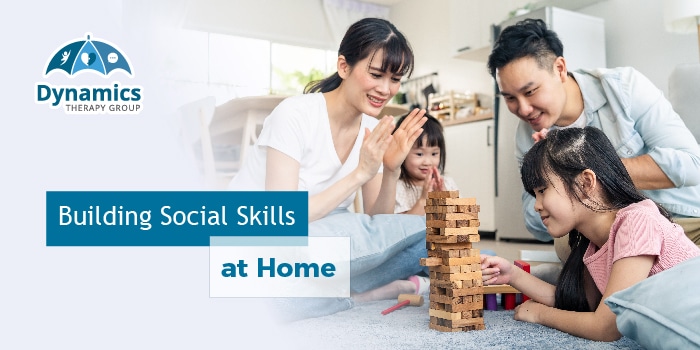
- Building Blocks: Creating a tall tower requires physical coordination and verbal communication to ensure the structure doesn’t fall.
- Team-based Board Games: These are excellent for teaching sportsmanship and the importance of following shared rules.
3. Play Conversation Games
Communication is a skill that improves with repetition. Conversation games are low-pressure ways to teach children the “ping-pong” nature of dialogue—where one person speaks and the other listens before responding. These games are perfect for “dead time,” such as during car rides, waiting in line at the grocery store, or sitting at a restaurant.
Consider games like:
- “20 Questions”: This teaches children how to formulate logical inquiries and listen to the answers to narrow down possibilities.
- “Would You Rather?”: This encourages children to justify their choices and explain their reasoning, which is a key component of expressive language.
- “The Compliment Game”: Each person says one nice thing about the person to their left, teaching children how to give and receive positive social feedback.
By turning conversation into a game, children lose the self-consciousness that sometimes plagues them when talking to adults or new peers.
4. Talk About Emotions with Storybooks
Books are a window into the human experience. Reading together is not just about literacy; it’s about emotional literacy. Characters in stories often face dilemmas, experience sadness, or celebrate triumphs, providing a perfect platform for discussion.
Instead of just reading the words on the page, stop and engage with the emotional subtext. Ask your child:
- “Look at the character’s face; how do you think they are feeling right now?”
- “The character seems angry because their toy broke. What is a better way for them to show they are sad?”
- “If you were in this story, how would you help the character?”
These questions bridge the gap between a fictional story and real-world empathy. Over time, children begin to apply this “character analysis” to the people they meet in real life, becoming more attuned to social cues and the feelings of others.
5. Teach Social Boundaries in Everyday Situations
The concept of “social boundaries” can be abstract for a child. They need concrete examples to understand what is appropriate in different settings. You can use your daily routine to point out these boundaries in a gentle, non-judgmental way.
Focus on these key areas:
- Personal Space: Use the “bubble” analogy to help children understand that everyone has a physical space around them that should be respected.
- Tone of Voice: Discuss the difference between an “inside voice” (quiet and calm) and an “outside voice” (energetic and loud), and when each is appropriate.
- Body Language: Teach children that their posture and eye contact send messages. Crossing arms might look “closed off,” while a smile and a wave look “welcoming.”
Role-playing common scenarios, such as meeting a new neighbor or asking a librarian for help, can give children a “script” to use, which significantly lowers social anxiety.
Small Steps Make a Big Difference
Building social skills is not an overnight transformation; it is a gradual process of trial and error. Every interaction is a building block. Whether it is a quick chat during dinner or a shared laugh over a board game, these moments reinforce the idea that connecting with others is a positive and rewarding experience.
Consistency is the secret ingredient. When parents prioritize these interactions, children grow up feeling seen, heard, and valued, which provides them with the inner security needed to extend that same kindness to the world around them.
Take Social Learning to the Next Level
While the home is the primary learning ground, some children benefit from a more structured environment to refine their skills. Structured programs can provide a “laboratory” for social interaction, where children can practice with a diverse group of peers under professional guidance.
At Dynamics, our Social Skills Group for Children is designed to bridge the gap between home learning and real-world application. In our supportive environment, children can:
- Practice real-life social interactions with peers their own age.
- Build communication confidence through guided group tasks.
- Learn specific strategies to navigate complex friendships and group dynamics.
- Develop resilience and problem-solving skills in a safe, monitored setting.
Led by experienced professionals, our program ensures that every child receives the tailored support they need to blossom socially.
Final Thoughts
Nurturing a child’s social development is one of the greatest gifts a parent can give. It doesn’t require expensive toys or complex lessons—just time, intention, and a bit of playfulness. By weaving these five activities into your daily life, you are helping your child build the confidence and empathy they need to navigate the world with grace. With your support, they will not only learn to connect with others but will also develop a deeper understanding of themselves.